


13 Nov Islington’s Inclusive Growth Plan Launch: Business with Purpose
Growth should be about more than buildings, investment and business turnover. It should create opportunities, develop skills, support local businesses and make a lasting difference to the communities in which we operate.
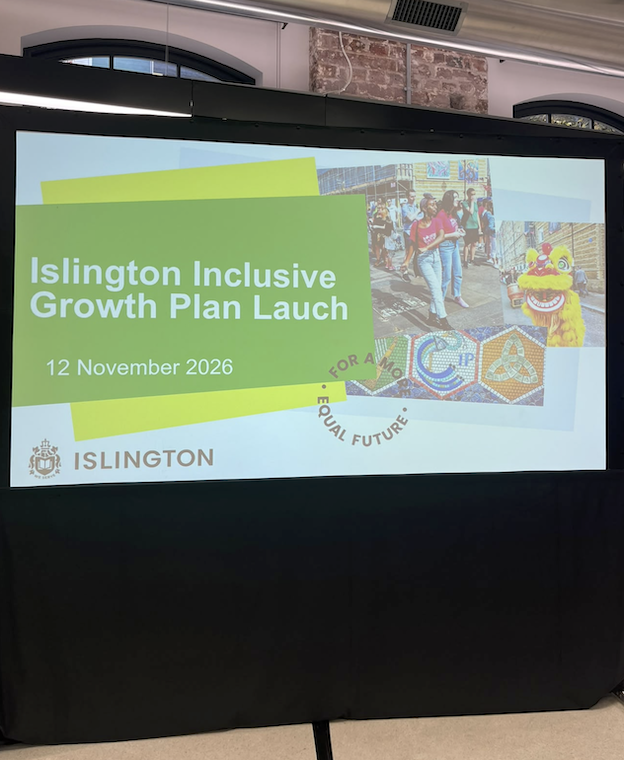
That was the message at the launch of Islington Council’s Inclusive Growth Plan on 12th November 2026, attended by Jenny Holloway, CEO of Fashion-Enter Ltd (FEL) and Chair of the Apparel & Textile Manufacturers Federation (ATMF).
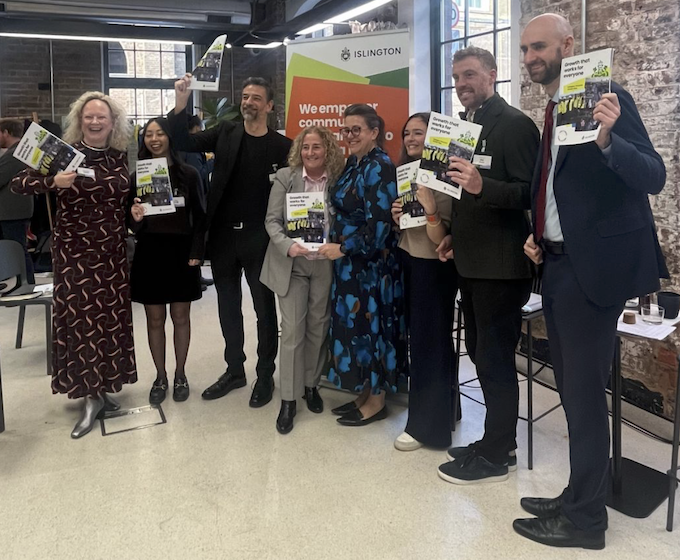
The event brought together representatives from business, property, community organisations and the Council to explore how Islington can build an economy that works for everyone.
For Fashion-Enter Ltd, the ambitions of the plan strongly reflect the work already being delivered through its FC Designer Workspace affordable workspace programme and FC Designer Collective retail space.
£1.1 million in social value in just 5.5 years
In 2019, Fashion-Enter Ltd successfully applied to the Affordable Workspace Programme, working with the Greater London Authority and Islington Council to establish a sustainable affordable workspace model.
The results have exceeded expectations. FEL has delivered an impressive £1.1 million in social value in just 5.5 years, smashing its original TOMs (Themes, Outcomes and Measures) targets against a 10-year target period.
This demonstrates what can be achieved when social value is embedded into everyday business operations rather than treated as a box-ticking exercise.
FC Designer Workspace provides affordable premises for fashion designers, creative entrepreneurs and emerging businesses, reducing financial barriers to starting and growing a business. FC Designer Collective complements this by giving independent designers and brands a retail platform to reach customers and generate sales.
Together, they create opportunities for businesses to develop, collaborate and contribute to the local economy.
Nine shifts to shape Islington’s economic future
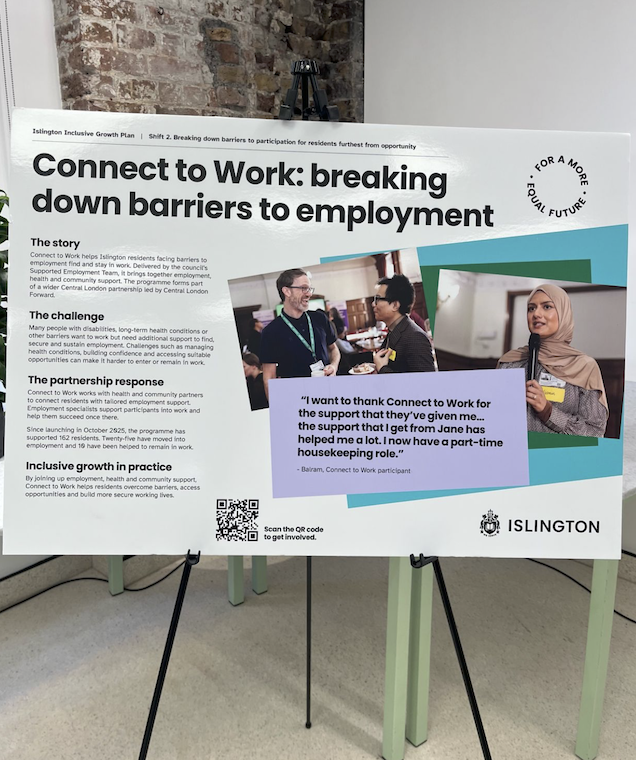
The Inclusive Growth Plan identifies nine important shifts:
- Delivering a step-change in youth employment and early-years access.
- Breaking down barriers to participation for residents furthest from opportunity.
- Fixing the workspace ladder, ensuring businesses can access suitable premises as they grow.
- Hard-wiring social impact into development, making community benefits central to economic progress.
- Turbo-charging the anchor institution network, strengthening partnerships across the borough.
- Shaping neighbourhood economies for long-term success.
- Building a resilient, adaptive and locally-rooted business base.
- Developing a Frontier Innovation Growth Corridor.
- Amplifying Islington’s shared successes.
Several of these priorities directly align with Fashion-Enter Ltd’s work. In particular, affordable workspace is essential to helping independent designers and small creative businesses establish themselves without being priced out of the market.
Similarly, embedding social impact into development is fundamental to FEL’s approach, with its £1.1 million achievement demonstrating how commercial activity and community benefit can work hand in hand.
Don’t overlook creative industries and manufacturing
Jenny Holloway welcomed the plan but highlighted the importance of recognising creative industries and manufacturing alongside construction and property development.
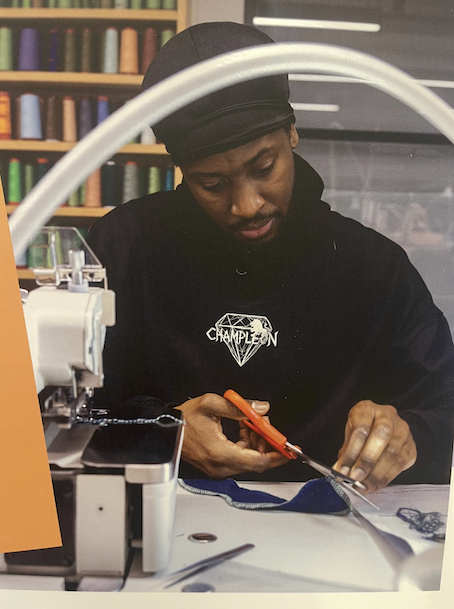
Fashion and textiles can provide valuable employment pathways, particularly for young people, those not in education, employment or training (NEETs), and individuals facing barriers to entering the workforce.
Commenting on LinkedIn after the event, Jenny said: “There were lots of references to construction jobs – please don’t write off the creative and manufacturing industry.”
She also highlighted the potential of UK public procurement to stimulate domestic manufacturing. Directing public procurement contracts towards UK manufacturers could increase production, create jobs and generate demand for skills and training.
Connecting procurement opportunities with investment in adult training budgets could provide practical routes into employment for NEETs and help strengthen the UK manufacturing base.
Businesses need contracts and opportunities to grow, while people need access to practical training and employers willing to invest in their futures. Bringing these elements together is essential to inclusive economic growth.
Social value must be part of every business model
Fashion-Enter Ltd believes social value and commercial success should never be viewed as competing priorities. Supporting local employment, developing skills, providing affordable premises, helping independent businesses and strengthening supply chains all contribute to a healthier economy.
The benefits extend beyond individual businesses. A designer supported by affordable workspace may establish a successful brand, employ staff, commission local manufacturing and contribute to the wider creative economy.
Sorry, the comment form is closed at this time.